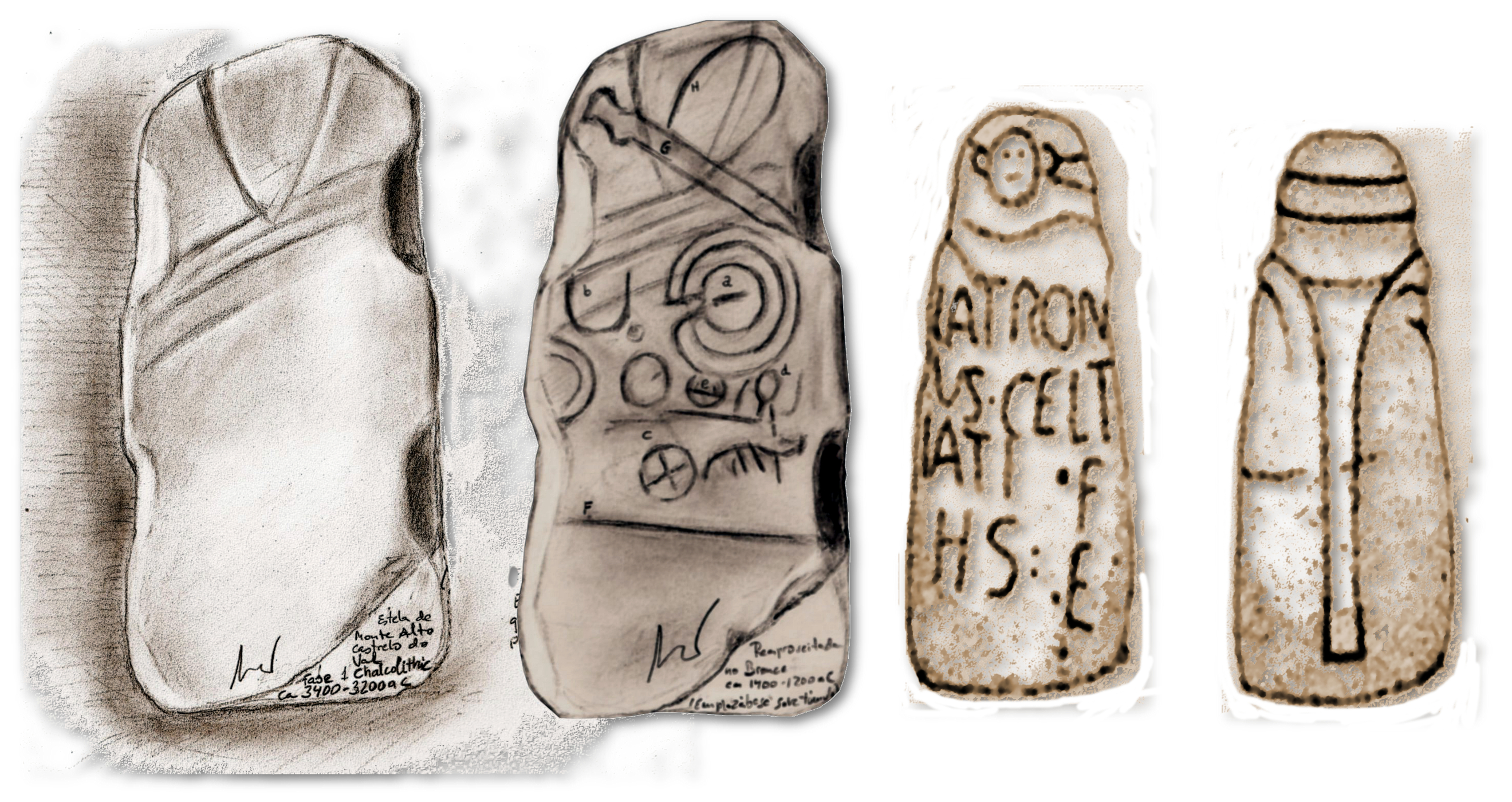

Separated in Gallaeciae from the adfines, “neighbors”, by termini, or mounds, like this chalcolithic one with a statue of the eponymous founder, in which they wrote in the Lower Empire: “Here lies [my ancestor] Celtiato, Lateron Son”, or landmarks called in our Celtic language carneiros, carracedos, carnoedos, coiras (Old Irish Cora; Corn. Cored, cf. VENDRYÈS sub vocabulo cora 1987), etc., the Political Territorial Organization of Gallaeciae described in the ancient sources with Celtic ethnonyms, “names of tribes”, knew pre-roman names of Treba and Toudo1. Both words define a common institutional system, a “Celtic princedom” – more appropriate than the term “Celtic chiefdom”. (ARNOLD & GIBSON, 1995)
 Narón, Fidalga Cidade