If the Ice Age glacial advance forced the Paleolithic Europeans to seek shelter from climate in places such as the Atlantic Lands End of NW Iberia, Finisterre, the subsequent climate change and ice retreat allowed the people settled for such a long period in the Atlantic coast of Iberia to return to Europe. As our rich mythology explains, this people probably left by sea from current Galiza, Nation of Breogão [“Brian”], first toward Ireland. They spoke an Atlantic Iberian Celtic language (as described by authors as Professor Moralejo, who analyzed river names, place names, deity names and other forms) and carried with them a social, political and religious organizational structure. They then migrated to Britain, moving into the Continent through the ice-free English Channel. This was the ‘Great Migration of the Celts’ as our present knowledge in population dynamics demonstrates.
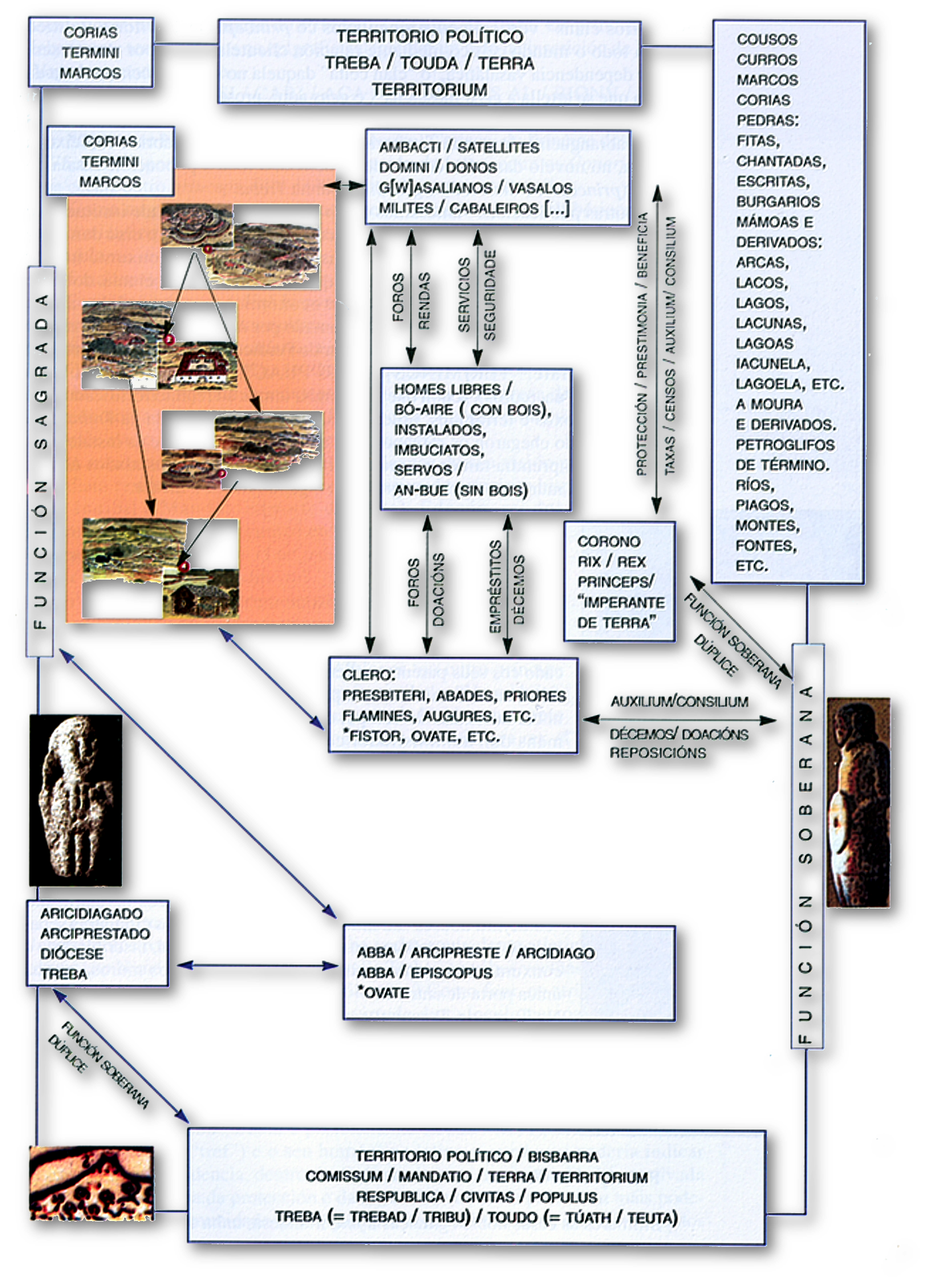
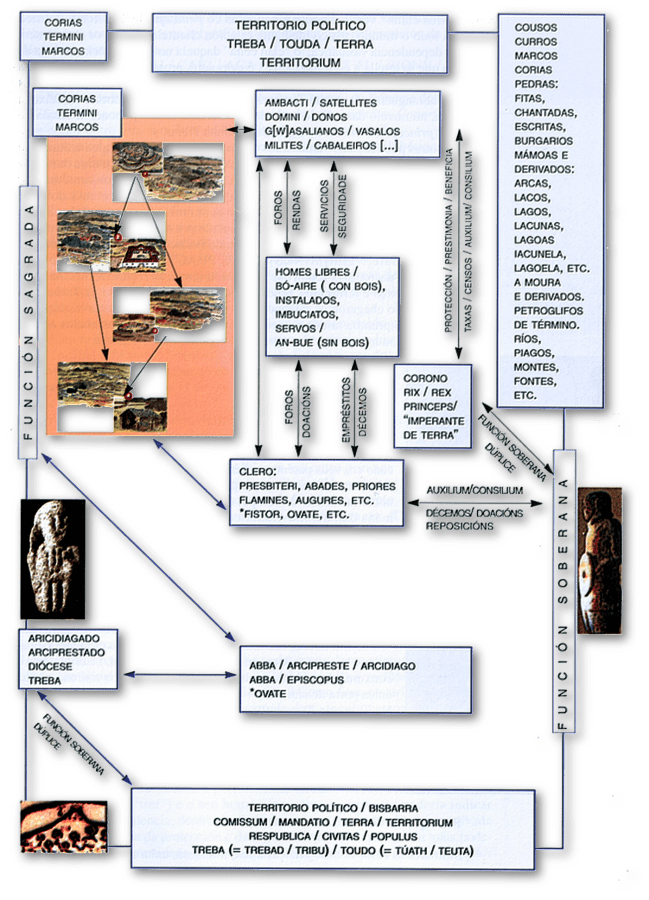
This long journey across land and sea also signaled the dissemination beyond the Galizan epicentre of such elements as the cup and rings and labyrinth petroglyphs, the legends of the arrival across the ocean from Brigantia of the Gaels to Ireland, and the foundation in memory of the abandoned home, by the Gallaecian Amergin, of Dun na Gall, Donegal the dun, briga “hillfort” or castro of the Gall-aecos. A common political order and organization was also spread out, superimposed on the local differences, establishing a joint “public and private common law” consuetam rationem [ruling treba/toudo and Briga, “hill fort”, Dun, castellum, “castro”], a common military organization [reges, ari, ambactos, ikurigos, acadrolios, etc.], a common calendar of annual festivities, etc., making the Celtic Civilization the true catalyzer for the creation of Europe.
 Narón, Fidalga Cidade